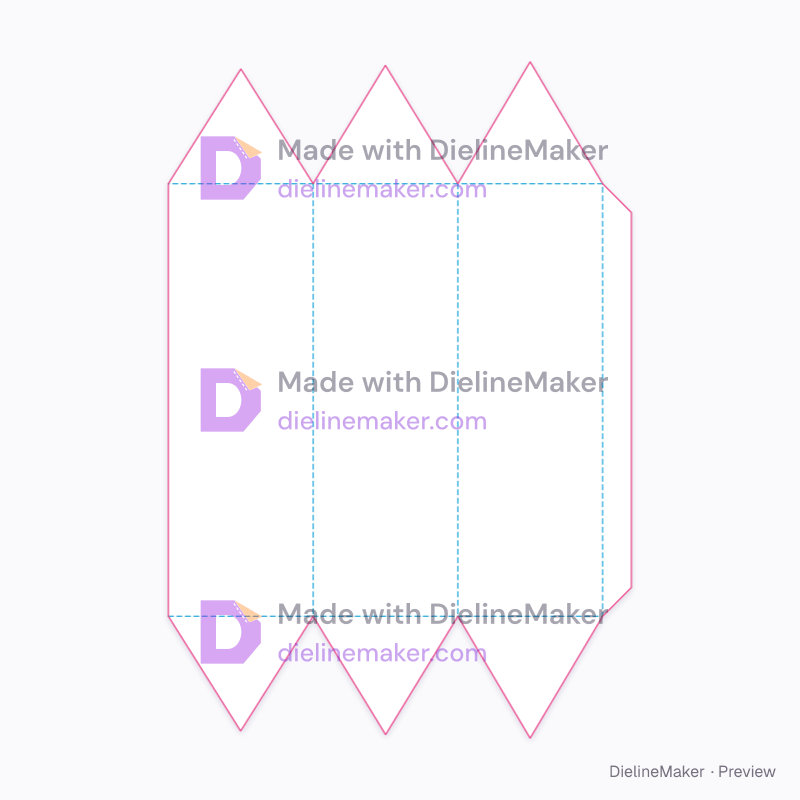
 Preset
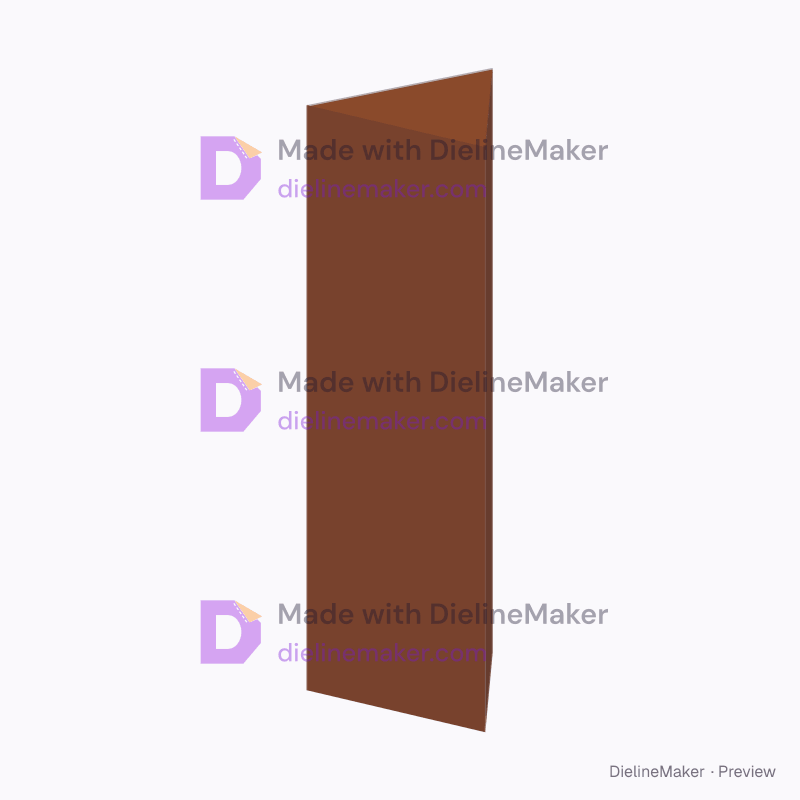
Preview image
The real blank at this size, folded by the same engine as the studio. The artwork is a sample from a fictional brand — swap in your own in the editor.
ECMA C10.10.10.10Shapes
ECMA C10.10.10.10 polygonal prism, frustum and pyramid cartons dieline
Long-seam glued tubes on a triangular, rectangular or polygonal section: straight prisms, tapered frustums and pyramids with glued, tuck, snap-lock, crash-lock or rosette ends. A parametric template — change the length, width and height and every panel, tuck and glue flap is redrawn to match.
Inside60 × 60 × 180 mm
Outside60.5 × 52.4 × 180.5 mm
Flat blank193.5 × 282.3 mm
Download the dielinePro
Sign in to download. Dieline downloads are part of Pro: PDF, Illustrator, SVG and DXF, cut, crease and bleed on separate layers, without a watermark. See plans
- Reference
- ECMA C10.10.10.10
- Inside size
- Side A 60 · Side B 60 · Height 180 mm
- Size range
- Side A 15–400 · Side B 15–400 · Height 20–600 mm
- Manufacturing
- 60.5 × 60.5 × 180.5 mm score to score · inside vs outside sizes
- Parts
- One blank
- Board area
- 0.044 m²
- Default board
- SBS white board 350 g · 0.5 mm caliper
- Board options
- SBS 350SBS 300FBB 400Kraft 350E-flute WSBS 18 pt
- Good for
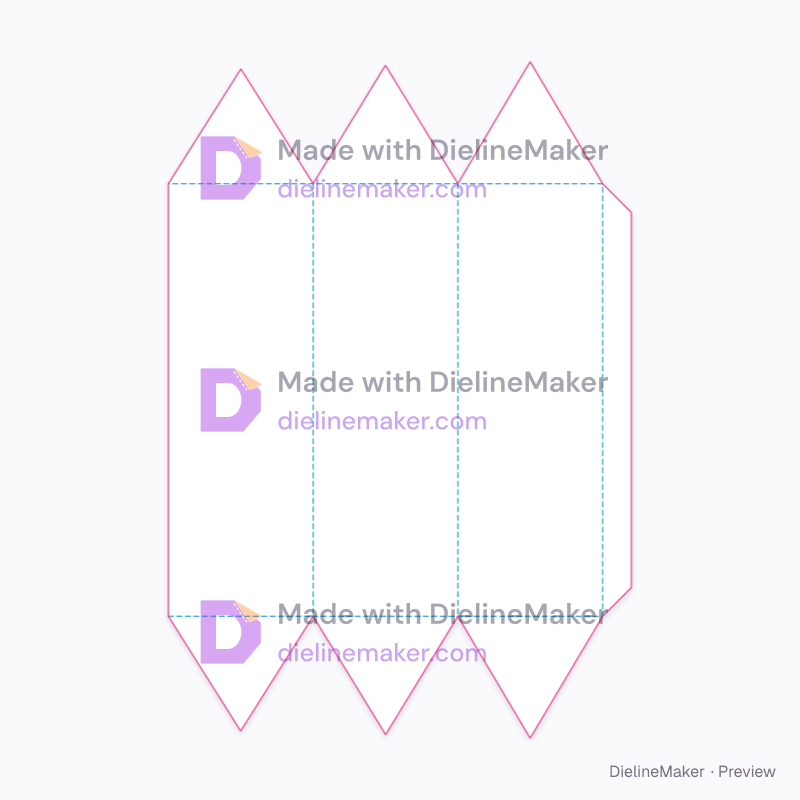
The flat dieline
Exactly what the downloads contain, drawn from the template at its default size, with a 3 mm bleed. How to read a dieline.
- Crease
- Cut
- Glue area
- Bleed 3 mm
On a production sheet
Exact engine layout at the stated default dimensions: 60 × 60 × 180 mm. Stock 1020 × 720 mm, grain along width; 12 mm gripper, 10 mm tail, 6 mm sides, 5 mm gutter and 3 mm bleed. Grain rotation, automatic layout. Each part is nested separately.
10 per sheet · Polygonal tube

Not proven optimal: upper bound 15 ups, within 5 ups (33.3 %).
How it folds
The polygonal prism, frustum and pyramid cartons erects in 5 steps, in the order the creases are scored to take. The editor plays the same sequence in 3D and lights each step’s creases on the dieline.
- 1Fold the walls upWall 2, Wall 3, Glue flap
- 2Fold the flapsOverlap flap
- 3Fold the flapsOverlap flap and 1 more
- 4Fold the flapsOverlap flap
- 5Fold the flapsOverlap flap and 1 more
How the blank is sized
Score-to-score panel sizes of this ECMA C10.10.10.10 blank at the default size, with the formula each one follows. L, W and H are the inside dimensions; T is the board caliper (0.5 mm for SBS white board 350 g). Change the size or board in the editor and every panel is recalculated.
| Panel | Size (mm) | Formula |
|---|---|---|
| Wall 1 | 60.5 × 180.5 | – × H + T |
| Wall 2 | 60.5 × 180.5 | – × H + T |
| Wall 3 | 60.5 × 180.5 | – × H + T |
| Glue flap | 12 × 180.5 | – × H + T |
| Overlap flap ×2 | 60.5 × 47.9 | – |
| Overlap flap ×2 | 60.5 × 49.4 | – |
| Overlap flap ×2 | 60.5 × 50.9 | – |
Adjustable in the editor
Beyond the size and board, this structure exposes 5 options; the template and 3D preview follow each change.
- Construction17 options
- Bottom section scale%
- Top section scale%
- Reduced / dust flap depth%
- Hanging header heightmm
Ready-sized polygonal prism, frustum and pyramid cartons presets
The same structure with sizes, boards and options set for a use.
- Preset
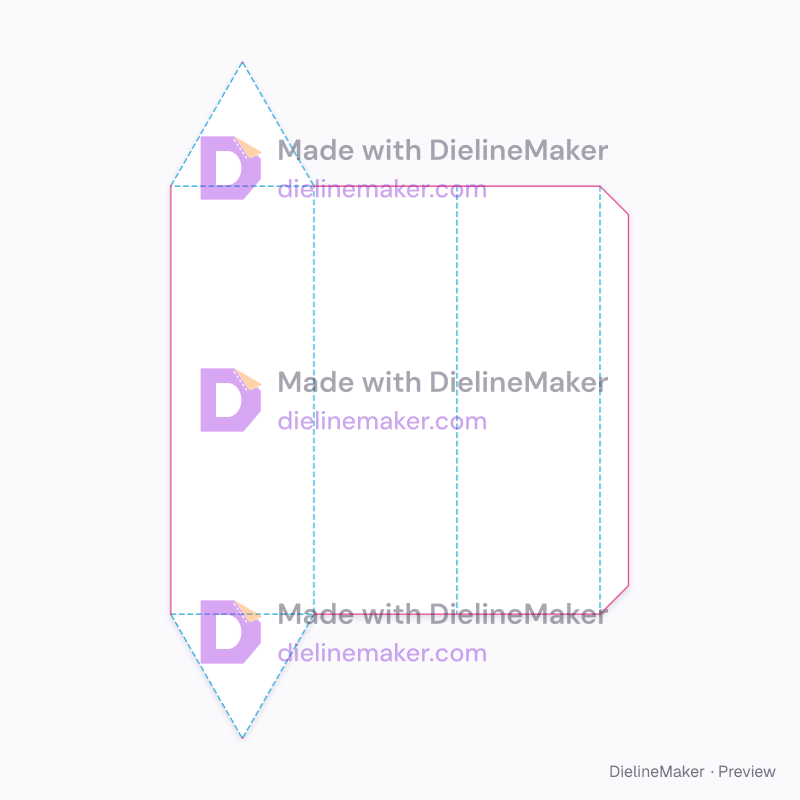 Preset
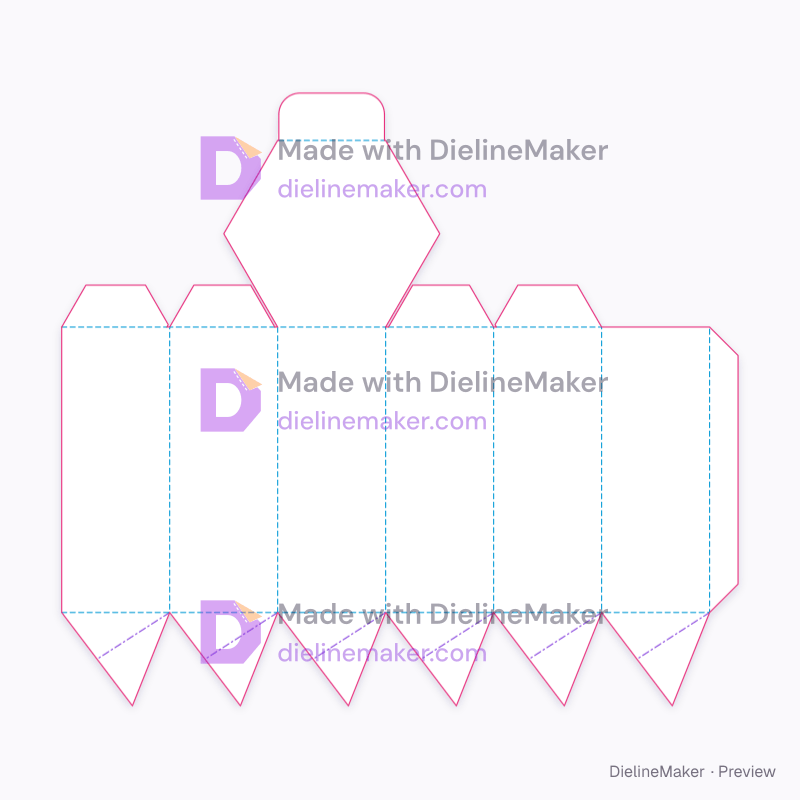 Preset
ECMA C10.40.60.20 · Hexagonal prism, crash-lock bottom, tuck top
ECMA C10.40.60.20
Dieline files on Pro
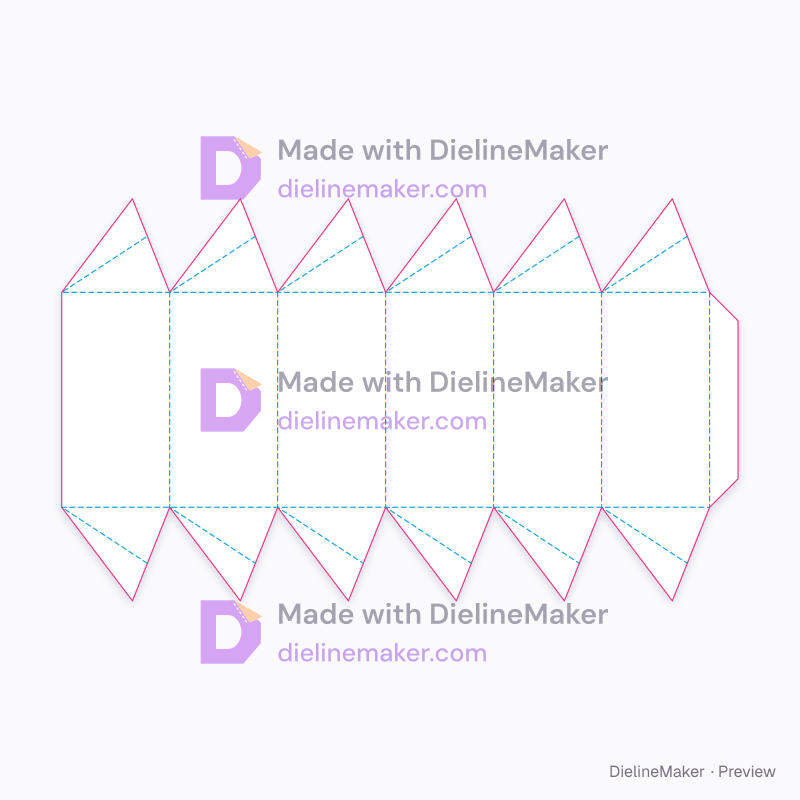 Preset
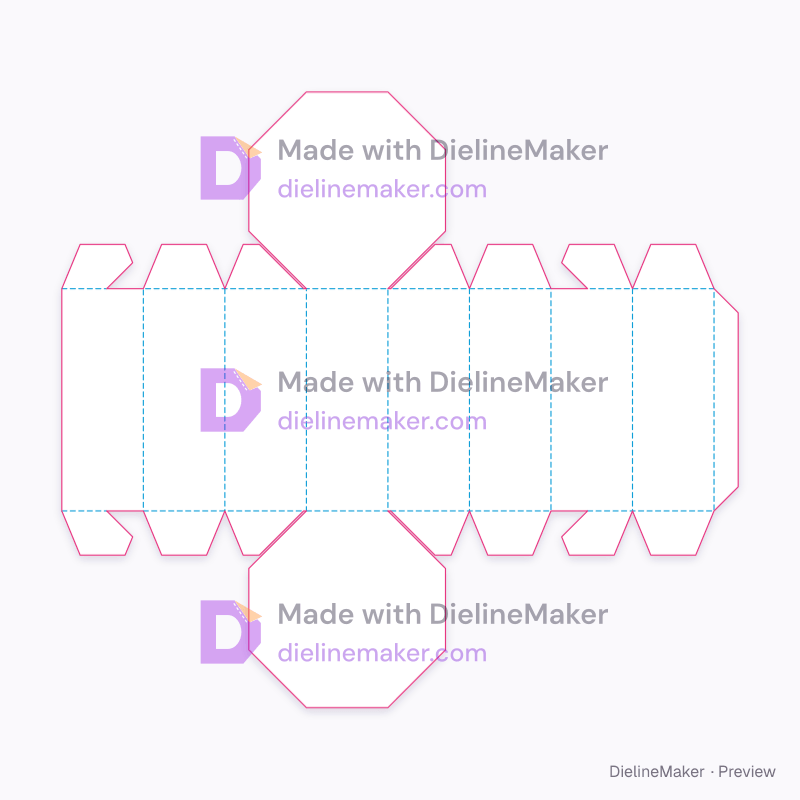 Preset
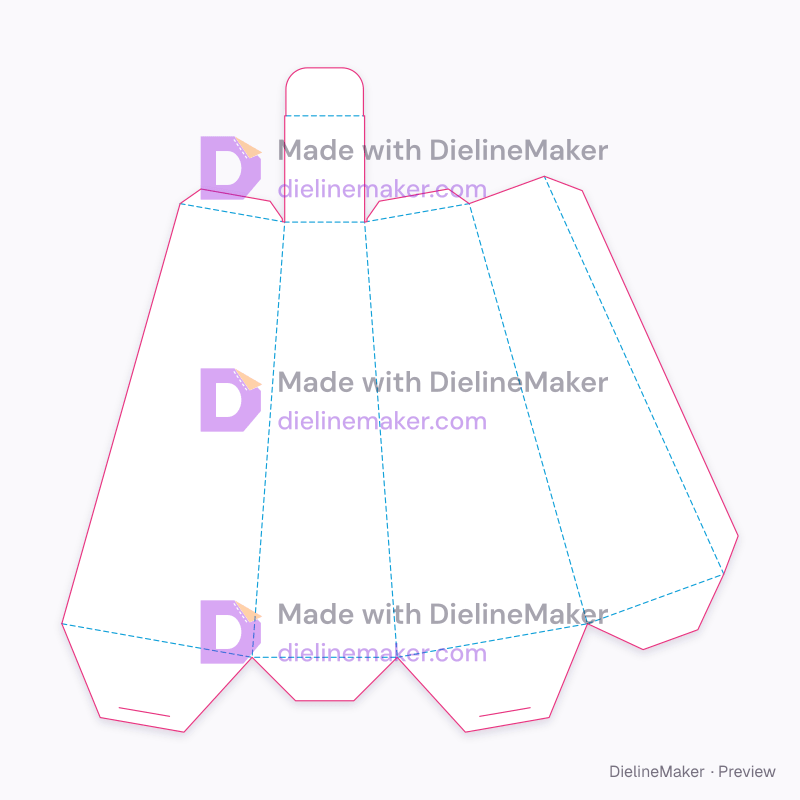 Preset
ECMA C20.20.55.20 · Tapered four-sided tube, snap-lock bottom, tuck top
ECMA C20.20.55.20
Dieline files on Pro
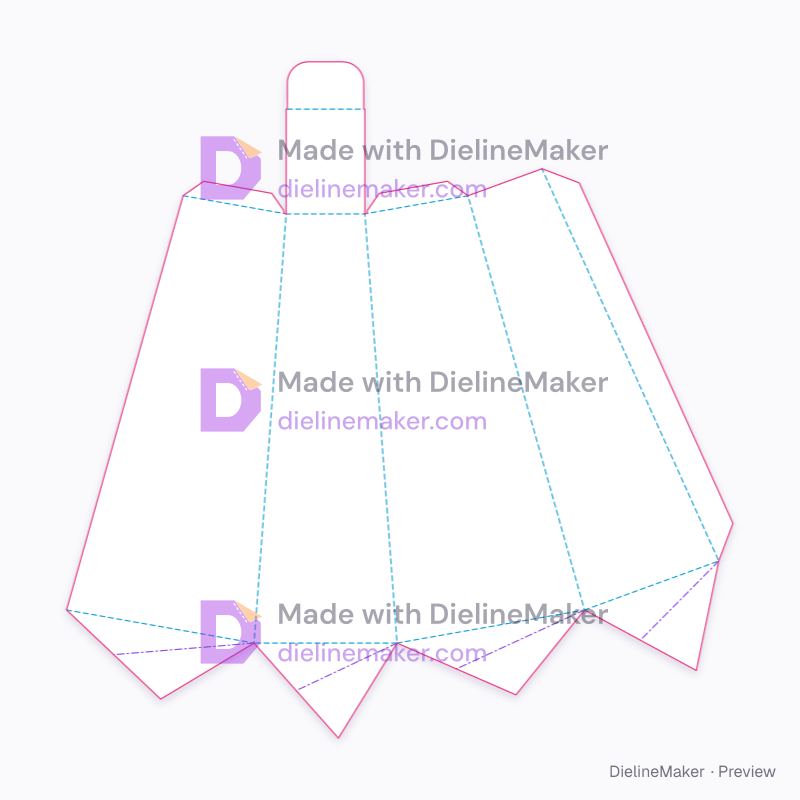 Preset
ECMA C20.20.60.20 · Tapered four-sided tube, crash-lock bottom, tuck top
ECMA C20.20.60.20
Dieline files on Pro
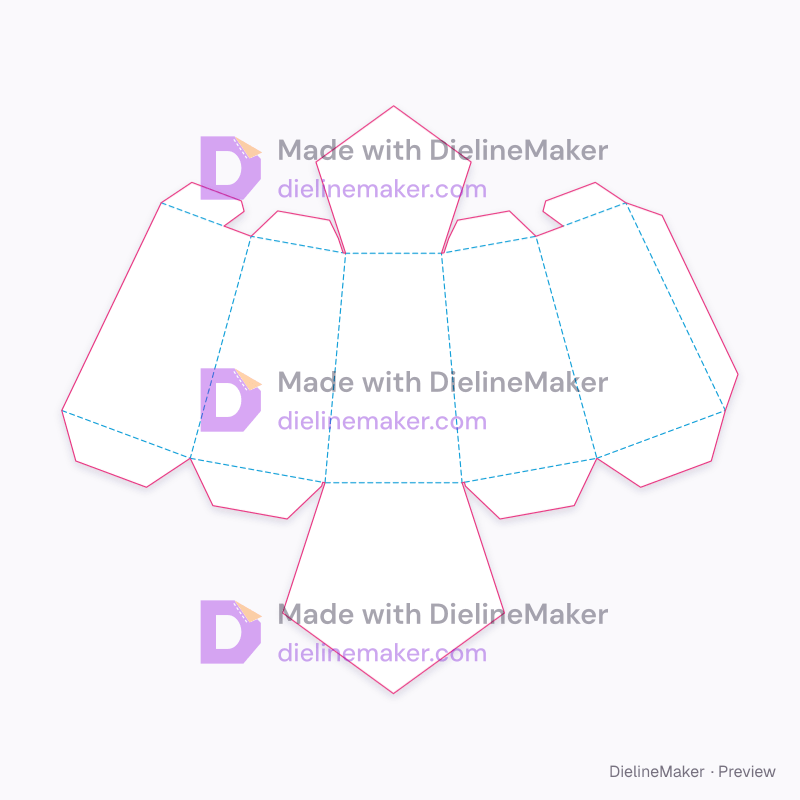 Preset
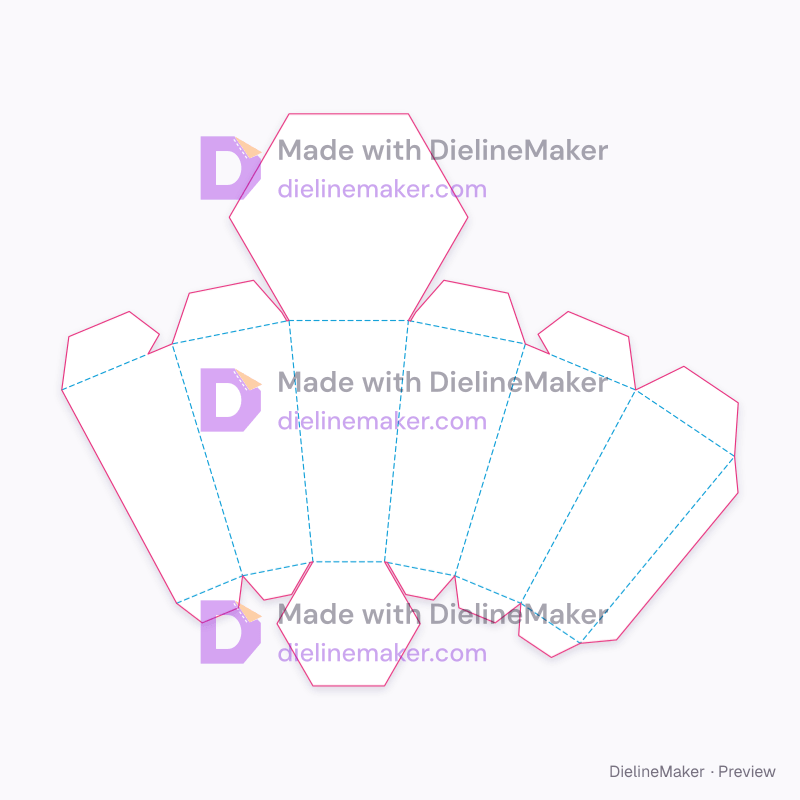 Preset
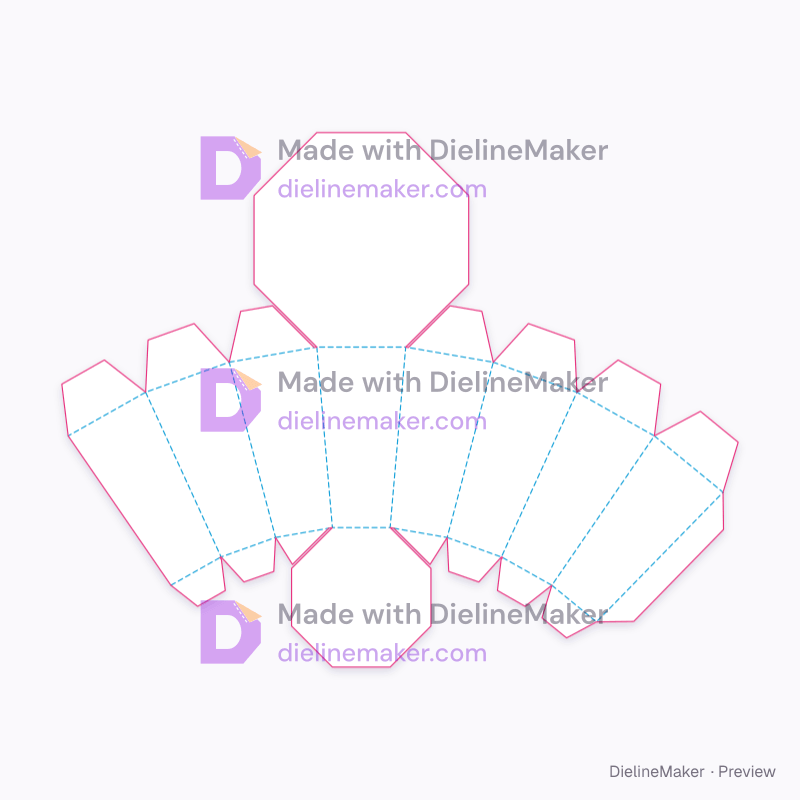 Preset
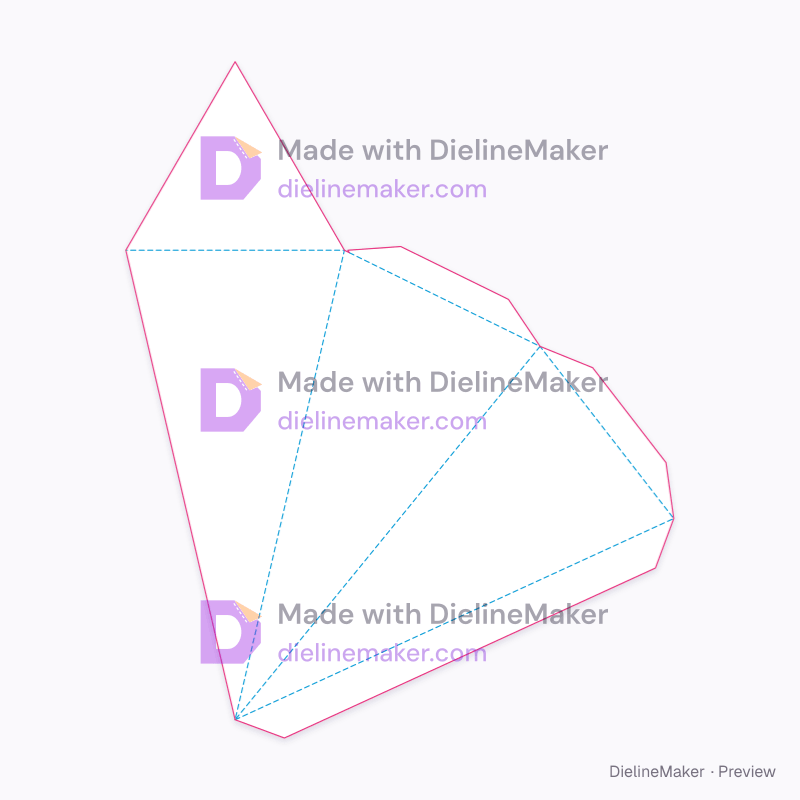 Preset
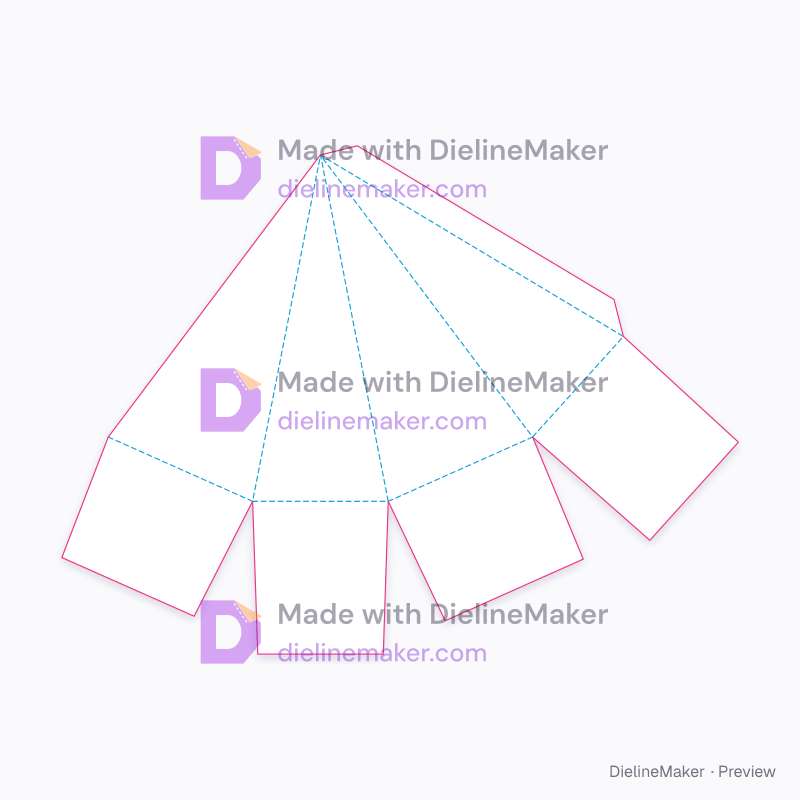 Preset
ECMA C30.20.10.01 · Four-sided pyramid, glued full-overlap base
ECMA C30.20.10.01
Dieline files on Pro
Before you choose this template
Size, materials, downloads and production checks.
Will the polygonal prism, frustum and pyramid cartons dieline fit my product?
Long-seam glued tubes on a triangular, rectangular or polygonal section: straight prisms, tapered frustums and pyramids with glued, tuck, snap-lock, crash-lock or rosette ends. The default dimensions in inside-size mode are Side A 60 mm, Side B 60 mm, Height 180 mm. Measure your product and any inserts or wrapping, then set the template size. Check a physical sample with your contents before ordering production.
Can I change the size and design?
Yes. The supported ranges are Side A 15–400 mm, Side B 15–400 mm, Height 20–600 mm. At the default settings, the editor also exposes Construction, Bottom section scale, Top section scale, Reduced / dust flap depth, Hanging header height. Add your own artwork and preview the result in 3D. The template geometry is rebuilt when its dimensions change.
Which materials can I choose?
The default is SBS white board 350 g (0.5 mm caliper). This structure allows SBS white board 350 g, SBS white board 300 g, Folding boxboard 400 g, Kraft board 350 g, E-flute white / kraft, SBS white board 18 pt. Select the stock before checking fit, and ask your converter to confirm the grade and caliper for the intended product.
Which files can I download?
The template page offers dimensioned PDF, Illustrator (.ai via script), layered SVG and DXF cutting and crease geometry. After adding artwork in the editor, you can export a print-ready PDF and review the bleed, safe areas and dieline layers with your printer.
Is this dieline free?
Browsing the previews is free, and you can customize the template after signing in with Google. Template and print-file downloads require a Pro or Business plan. The Free plan allows one eligible download every 8 hours; free mockups, renders and videos carry a watermark. See the pricing page for the current plans.
Can I send the download straight to production?
Use the file as a starting point for a printer or converter review. Confirm the finished dimensions, stock, crease and cutting setup, assembly, bleed and artwork, then approve a physical sample. The 3D preview does not test strength, transit performance or suitability for particular contents.
Similar structures
Other structures built in a similar way, matched on code family, category, closures and proportions.
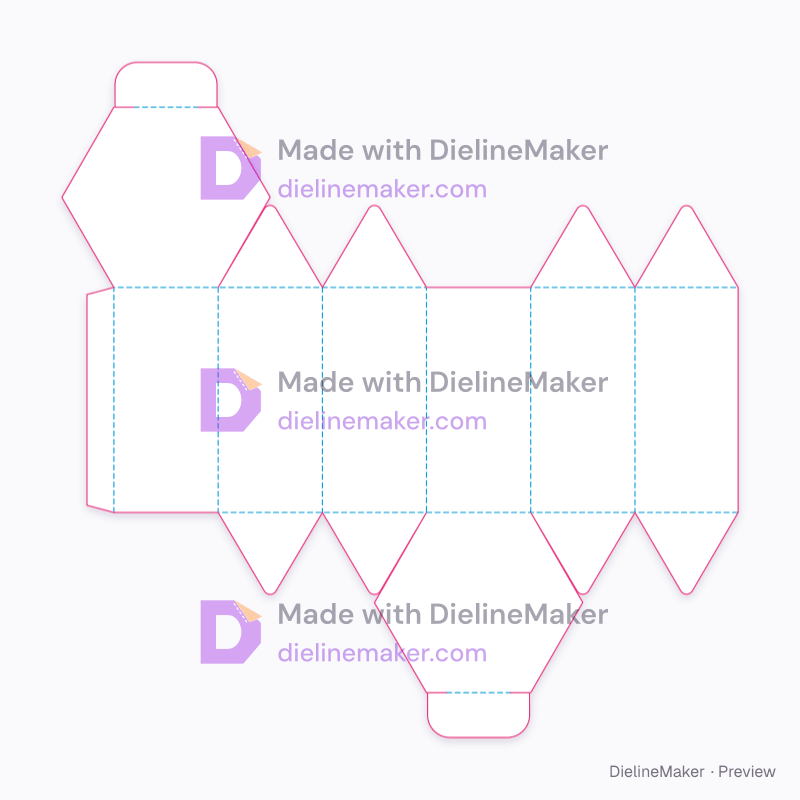
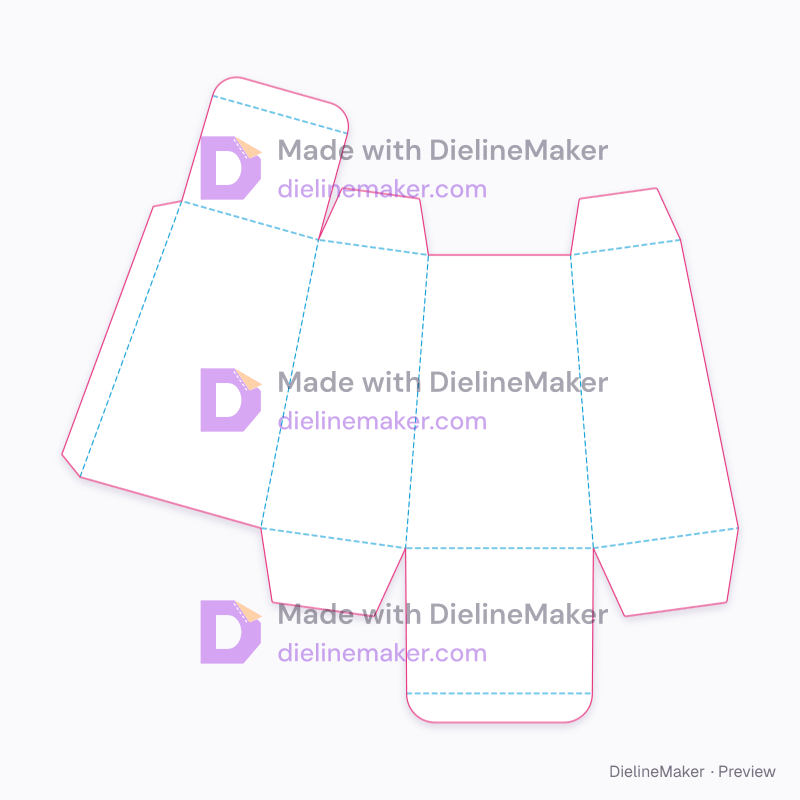
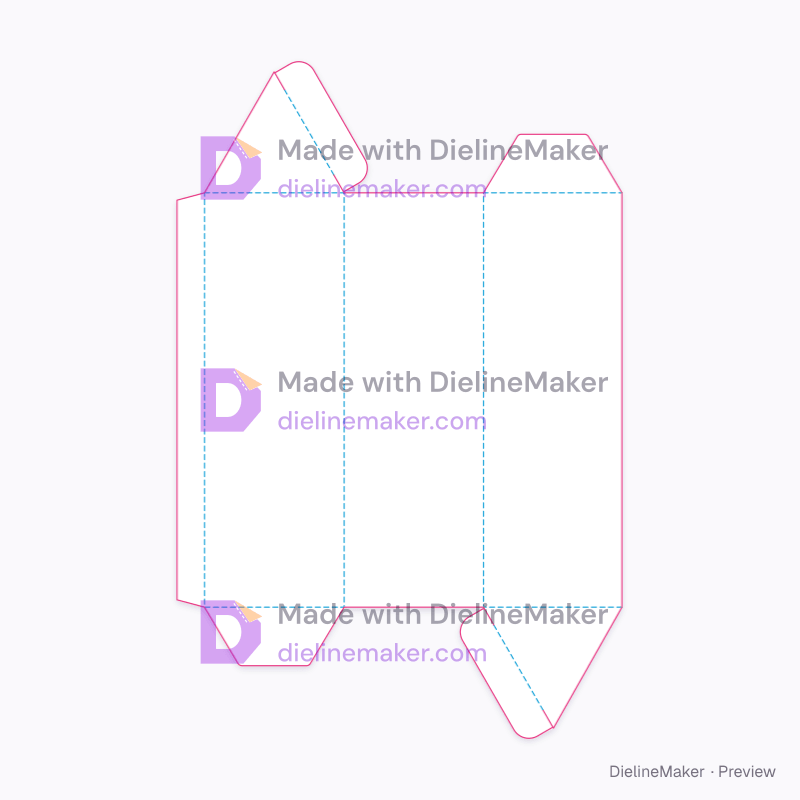
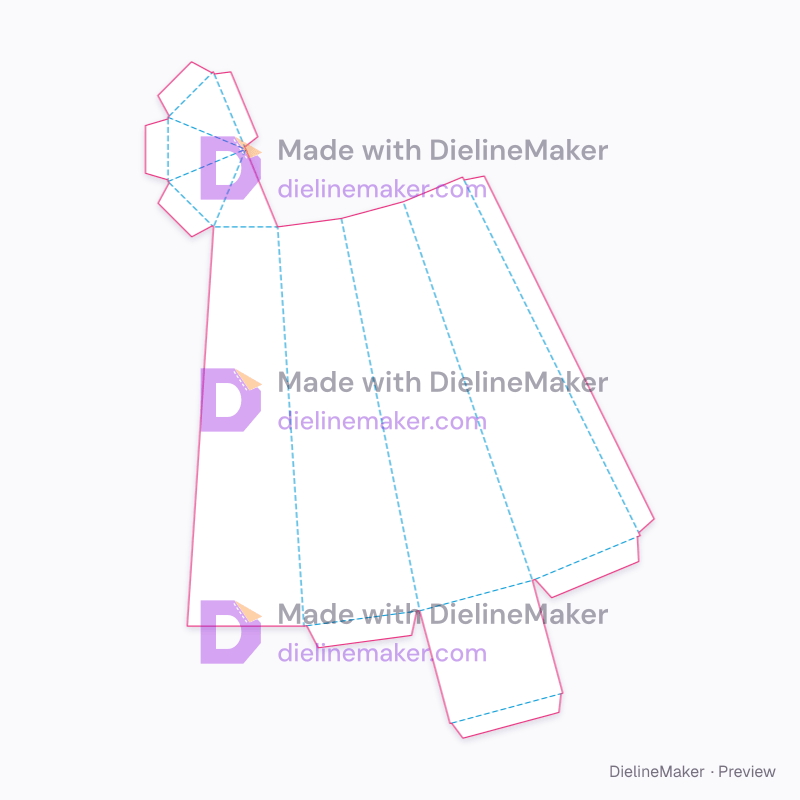
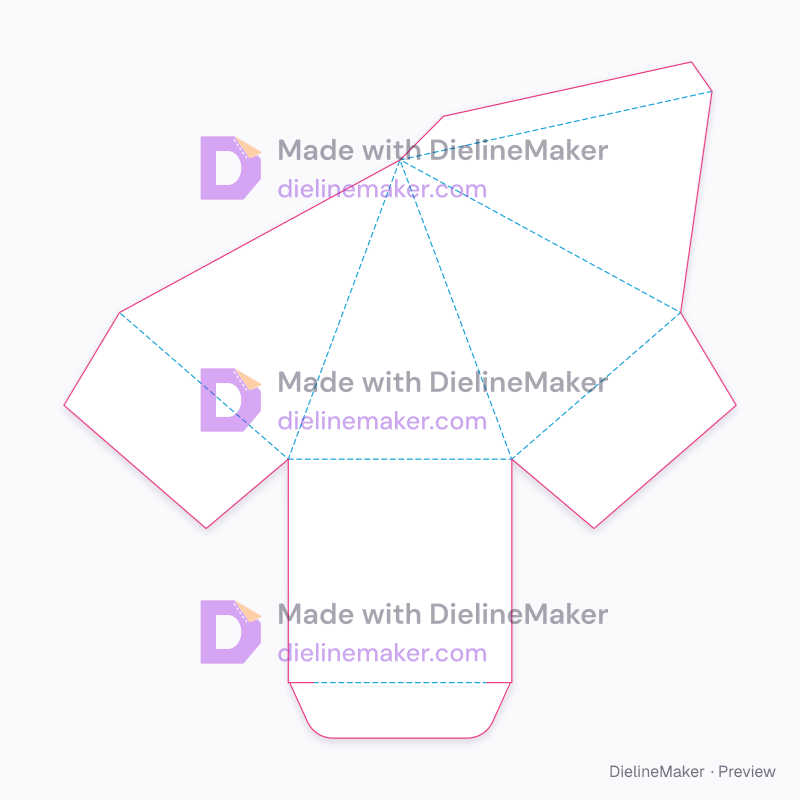
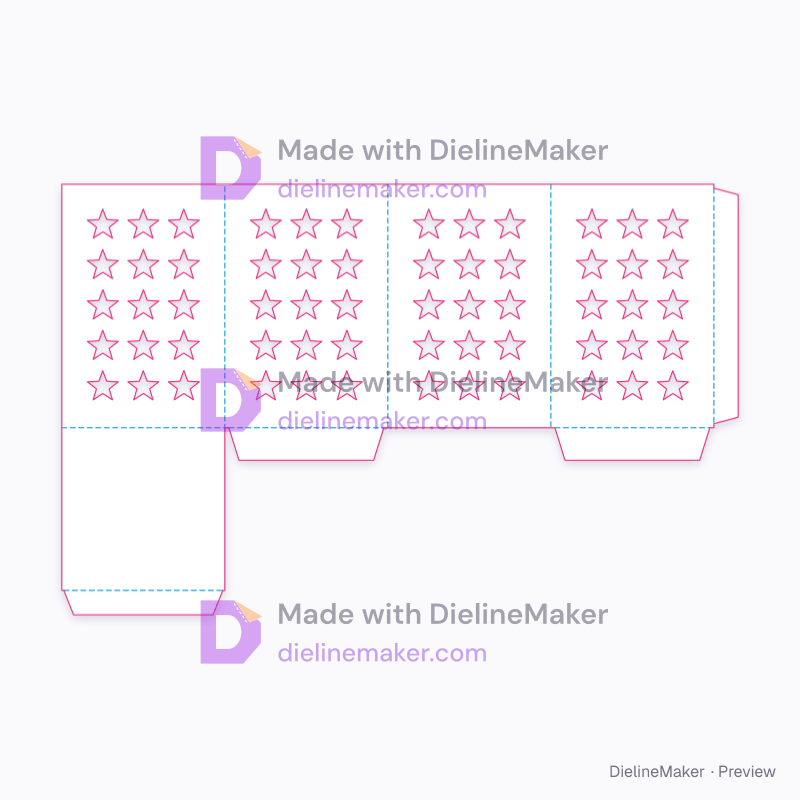
Make this polygonal prism, frustum and pyramid cartons yours
Open it in the editor to set your size, drop artwork on each face, check bleed and safe areas, and export print-ready PDF with the dieline on its own layer — or stage it in a 3D scene for a mockup.